Mar 28 2009

The Language of Whisky

With no Internet access at my Islay cottage, I rely on the WiFi at the Lochside Inn in Bowmore or at the house of my friend Martine Nouet. Martine, as you may know, is a fantastic writer of all things whisky and food, and pioneered the cuisine of paring the two.

Recently, Martine asked me to join her to taste some new releases for Whisky Magazine’s French edition (http://www.whiskymag.fr/mag.php), which she edits, as well as writes for. The magazine recently came out and is on shelves throughout France. If you’ve ever wanted to read me in French, this is your chance. If you, like me, can’t read French, I’ll provide my tasting notes in the original English for your enjoyment:

Auchentoshan 1999; 46%

Score: 7.5

Nose: Lemon zest, apples and guava. Fresh bread. Faint flowers. Dash of water brings out light peppers.

Palate: Medium-dry and slightly chewy. Tropical fruit, pineapple, peach and faint lemon. Developing malt. Pepper with water.

Finish: Long and warming. Throaty.

Comments: Pleasant aperitif or daytime dram.

Glen Ar Mor; 46%

Score: 8.75

Nose: Feisty fun. Bubblegum. Spring wildflowers. Mouthwatering play-dough. Mistletoe.

Palate: Rich bubble gum that settles into berries and cream. Cranberries. Grassy. Ginger-cinnamon snaps.

Finish: Dashes away quickly before peeking out playfully one last time.

Comments: Looking forward to seeing this exciting youngster mature under the tutelage of its wooden headmaster.

Lambertus Single Grain 10 years; 40%

Nose: Fruitier than expected with bananas and strawberry mousse; budding saplings coming under oak; vanilla; toffee; cherry with water.

Palate: Medium body. Banana crème pie; strawberries; vanilla; overtones of fallen leaves; subtle chestnuts; milk chocolate; dark chocolate with water.

Finish: Gentle waves with a cherry chaser.

Comments: A simple and enjoyable grain whisky that grows on you.


Mar 23 2009

Love Still Rules

Whisky making is really the marriage of water, grain and yeast.  Once wed, they never part.  With such romantic pairings in the whisky, it’s no wonder that charming a charming German couple chose the Bruichladdich Distillery Still House to take their vows recently.

A whisky wedding at Bruichladdich.

A whisky wedding at Bruichladdich.


Heinz and Gudrun and a handful of their close friends crowded into the Still House, along with several Bruichladdich employees.  As an added bonus, Caran was leading a tour when the wedding started, so a few extra folks from scattered places around the globe also gave their support (and their camera flashes) to the ceremony. 

Now, a whisky distillery is a relatively continuous operation.  There is no stopping a still once it gets going with spirit production.  As the happy couple exchanged vows, Neil and Dave continued to scramble under piping to turn gears and to check temperatures to make sure the stills were running properly.  Roddy came up from IT to capture the momentous occasion on digital camera.  Mary poured the whisky for the ceremony-concluding drams.  Duncan and Ella both stood by to offer the official Bruichladdich thanks.

In the back of the room sat Ruariadh, who is now retired, but first started at the distillery in 1956 and worked there for 40 years. 


The Laddie Lasses congratulate the lucky Japanese tourist who took home the bridal bouquet.

The Laddie Lasses congratulate the lucky Japanese tourist who took home the bridal bouquet.


When all was said and done, the happy couple exited the building led by a bagpiper.  In keeping with the universal appeal of whisky and love (maybe not in that order), a young Japanese woman caught the bouquet as her boyfriend stood by with a look of uncertainty on his face.  Whether that was because he didn’t understand what the bouquet toss meant or whether he understood it far too well, I’ve no idea.


As luck would have it, the couple chose the nicest day of the year for the nuptial with a sunny sky, pleasant temps and no wind.  Here’s to wishing the rest of their married life will be a breeze!

Mar 17 2009

A Cure for Your Ales

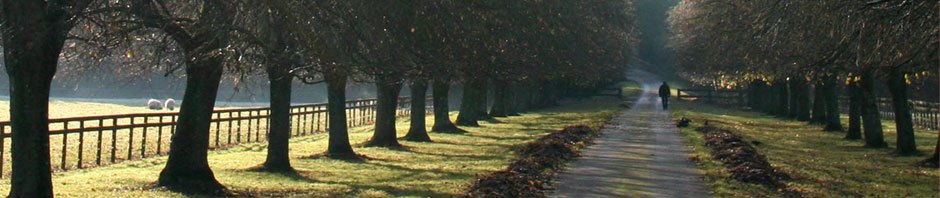
There is more than just whisky on Islay, and that’s a good thing.  Last week, I took a stroll down a tree-lined lane to an unassuming courtyard.  The courtyard contains the renovated buildings from an estate’s farm.  Today, it houses a little gift shop, chocolate shop, tailor, art gallery and…brewery.  Yes, a brewery!

It’s smaller than my cottage at Persabus, but makes up for it with big, bitter, bold tastes of some wonderful brews.  Most Scottish beer is rather light for my palate, so it’s no surprise that the Islay Ales brewery www.islayales.com is run by two Englishmen, Paul and Paul, who transplanted themselves to Islay a few years ago.  The English are known for their bitter and hoppy beers.

Neither Paul nor Paul had any beer experience at all, aside from drinking it.  But, they knew what they liked, researched, talked with experts and did a little training.  The result is fantastic, with seven different brews to choose from.  Most of the beer is sold to tourists in several of the island’s pubs, as the natives tend to stick with their familiar canned beer.  It’s no different than most Americans drinking Miller or Bud rather than mircobrews.

So, if you make it to Islay and think that you want a little change of pace from all the wonderful whisky, know that you have some options! 


Mar 3 2009

Ardbeg’s Long Road to Renaissance

Ardbeg Distillery sits at the end of a two-lane highway that shrinks to a single-track road.  Those willing to continue on that road find it to be narrow and bumpy with steep hills, blind turns and an otherworldly landscape.  It’s appropriate that Ardbeg is the last stop before you venture on, as the whisky is among Islay’s heartiest, with a big peat punch to keep you company along the way.

Ardbeg blends the classic with the future.

Ardbeg blends the classic with the future.


Distillery Manager Michael Heads came to Ardbeg from Jura two years ago with one goal in mind: don’t mess with a good thing.  Ardbeg may not be the best known of Islay’s malts, but it is a dandy.  The distillery was closed in the early 1980s and then was on and off again for a period in the mid-1990s. Only in the past decade or so has it seen regular production.  And that production has increased tremendously as more people discover and appreciate the malt.

Ardbeg’s biggest fans are The Committee, an official club of Ardbeg enthusiasts from around the world.  They are treated to Committee-only releases and have input, according to Michael, on Ardbeg’s bottlings.  After all, if the distillery’s biggest fans love a release, or don’t, they are probably pretty reflective of the buying public.  It’s a personal market research team.

That road I told you about is Islay’s main road, running through Bruichladdich, Bowmore and Port Ellen.  It passes Ardbeg’s neighbors Lagavulin and Laphroaig before letting you jump off at the distillery.  The site is lovely, though it’s so close to the ocean you feel as though a big wave could douse the warehouses with saltwater at any moment. 

The old maltings area has been turned into the fantastic Old Kiln café, which serves up some fabulous lunches.  The café and attached gift shop/tasting room are a great combination of contemporary design and classic distillery structure.  The cuisine is also wonderful, and many people make the trek to the end of the main road just to enjoy a healthy and hearty lunch.

With the on and off again production Ardbeg had in the 1990s, their younger whisky expressions were limited for a number of years.  Five years ago, however, they had enough quantity and quality from their turn of the century rebirth to bottle a six-year-old they aptly called, “Very Young.”  Next was an eight-year-old, “Still Young” followed by the nine-year-old, “Almost There.”  In each, you can experience the melding of peat, fruit-tinged spirit and wood.  The offerings reach their apex (for now?) with the 10-year-old “Renaissance,” which I find to be a simply exciting dram. 

When you continue down that single track road past Ardbeg, you’re stepping back in time.  You come across the 8thCentury Kildalton Celtic Cross.  There are a couple of 4,000 year-old standing stones.  If you stop at Ardbeg before you go down that road, you’re taking a bit of the past with you, as Michael thinks Islay’s peaty malts owe their heritage to the smoky flavors of the first whiskies made a short hop away, in Ireland, more than 1,000 years ago. 

However, I suggest stopping at Ardbeg after returning from that single track trek.  For as much as Ardbeg owes its flavors to the past, the improvisations Michael and his team give to that ancient art will certainly continue to propel their whiskies well into the 21st Century.